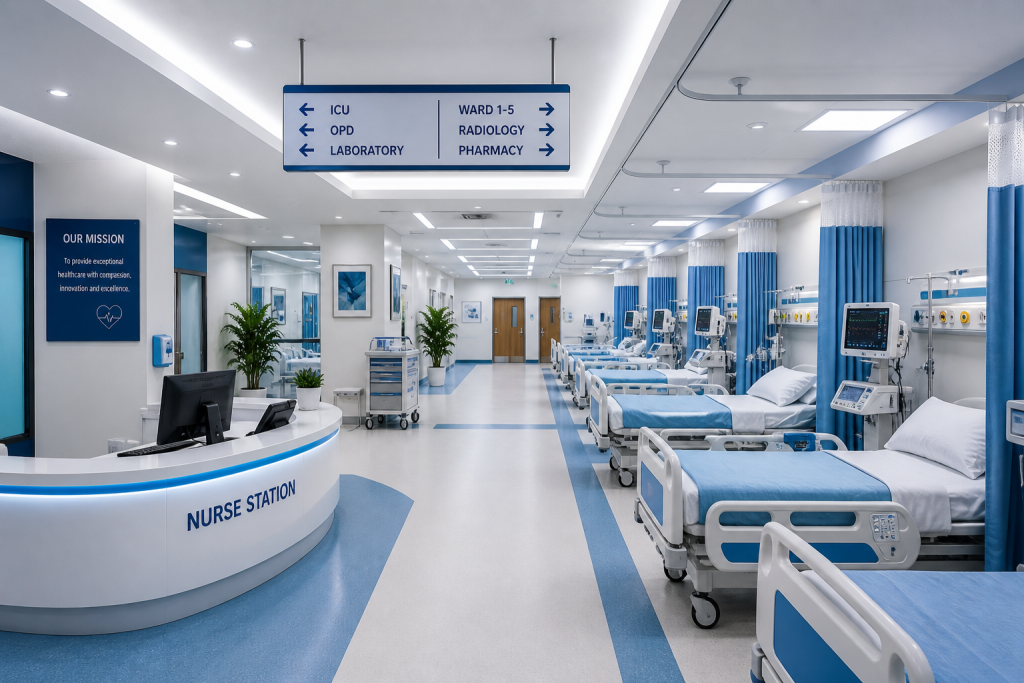
Modern hospital infrastructure plays a vital role in delivering high-quality healthcare services. A well-planned hospital is not just about buildings—it is about creating a system that ensures efficiency, safety, and patient comfort.One of the most important aspects of hospital design is workflow optimization. Proper layout planning helps doctors, nurses, and staff move efficiently, reducing delays and improving patient care. Departments such as emergency, ICU, and operation theatres must be strategically located for quick access.Advanced medical systems are also a key part of modern hospitals. This includes centralized medical gas pipeline systems, modular operation theatres, advanced HVAC systems, and infection control measures. These systems ensure a safe and controlled environment for both patients and healthcare professionals.Patient experience is another crucial factor. Comfortable patient rooms, proper lighting, ventilation, and noise control significantly improve recovery and satisfaction levels.Additionally, integrating digital solutions like Hospital Management Information Systems (HMIS) helps streamline operations, manage patient data, and improve overall efficiency.In conclusion, modern hospital infrastructure is a combination of smart design, advanced technology, and patient-centric planning. Investing in the right infrastructure ensures better outcomes and long-term success.